
|
Angela Kline-OsenEducation Currently enrolled at UTA in the Earth and Environmental Science Awards Office: GS Room 242 |
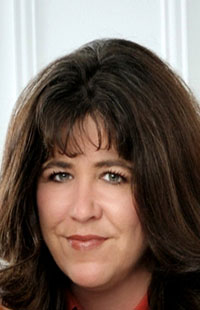
|
| For my Ph.D. research, I intend on investigating possible causes that may have led to the Permian-Triassic mass extinction, a period in Earth’s history where over 90% of marine and 70% terrestrial species perished (1). Geological evidence suggest the Permian-Triassic boundary was a time of significant climatic changes possibly due to increased release of greenhouse gases by massive tectonic/volcanic activities (2). Investigations of sedimentary layers indicate the possibility of large-scale anoxia along with a shallow chemocline, particularly in the area once covered by the Tethys Ocean (3). Possible influences of marine biology will be investigated, particularly green and purple sulfur bacteria, which is often used as biomarkers as well as indicators of euxinic conditions in sedimentary samples (3). I plan to carry out a series of time-slice simulations using the comprehensive climate model CCSM-3, including an ocean-carbon cycle as well as a sediment model to predict the oceanic and sedimentary response to Permian-Triassic boundary land-sea distribution along with the seafloor bathymetry. By utilizing National Center for Atmospheric Research’s CCSM-3 program, I intend to interpolate ocean and atmospheric changes during the Permian-Triassic boundary by branching out of an earlier run performed by Dr. Arne Winguth. Sensitivity experiments are to be run involving the lower sill in the Tethys Ocean and on a North-South located mid ocean ridge in the Panthalassa Ocean building upon experiments performed by Kiehl and Shields (4). Methane and sulfur releases as well as anoxia scenarios will be explored. By studying past events, I intend to gain a better understanding of what could possibly happen to our climate as greenhouse gases increase in the atmosphere. Moreover, investigation of the biological interactions within the ocean during the Permian could conceivably aid in understanding complications the oceans of today may face if the ice caps disappear. | |
Literature
|
|
Memberships and Activities
|
|